
The Blueprint: Restoring and Painting Brownstones in Jersey City & Hoboken
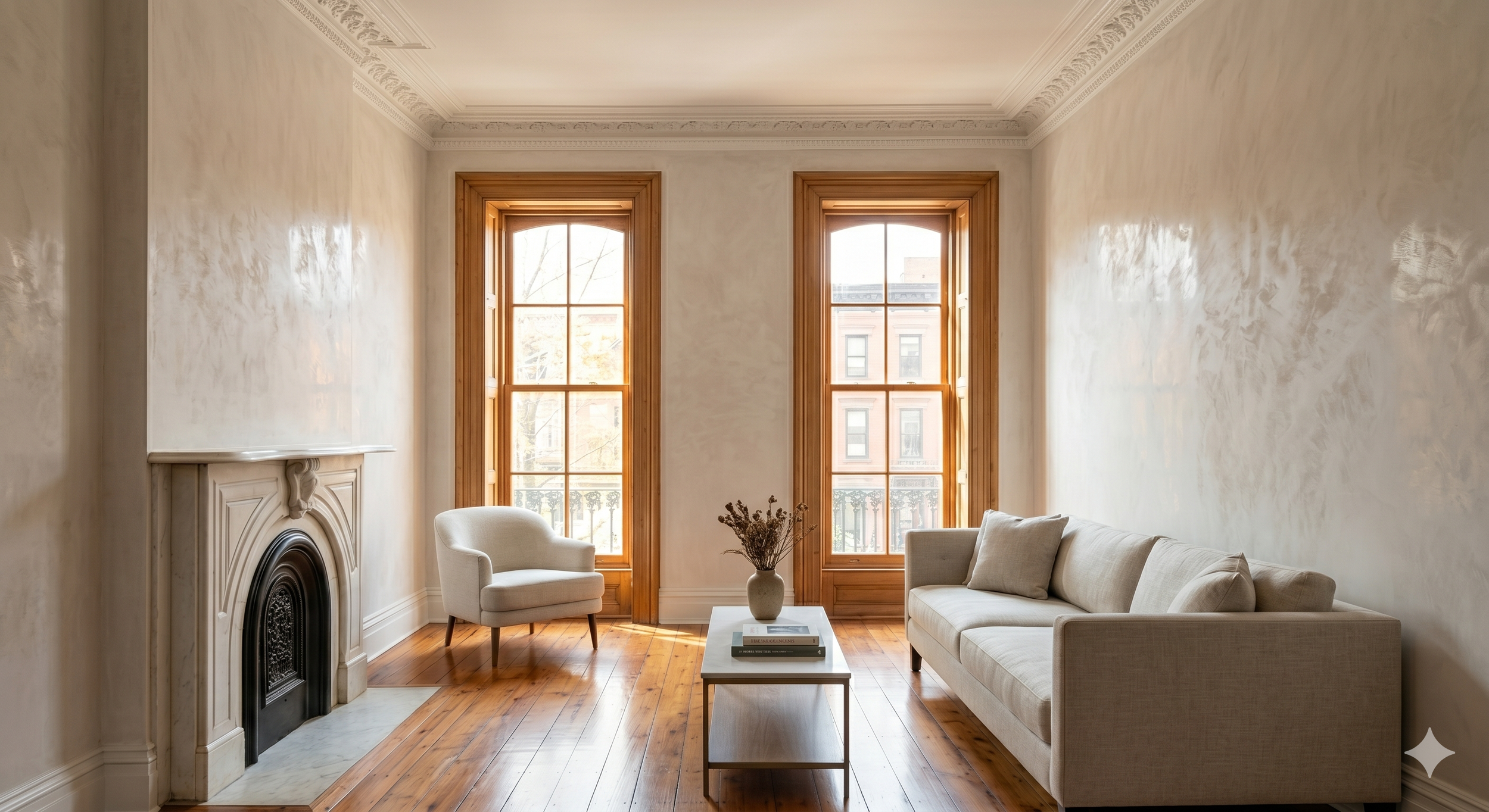
Navigating historical commissions and choosing the perfect Venetian plaster can be daunting. Here is your comprehensive, data-backed manual to bringing Hudson County's legendary 19th-century properties back to life.
Historic brownstones are undeniably the crown jewels of the Hudson County real estate market. Constructed mostly between the mid-nineteenth century and the dawn of the twentieth century, these beautiful masonry rowhomes provide an architectural charm that modern glass high-rises just cannot match. However, purchasing one of these classic residences requires a deep commitment to preservation. Updating aging structures to meet the strict standards of local preservation boards—and removing decades of old paint—demands dedication, adequate funding, and highly skilled craftsmen.
Understanding the Brownstone Market: Locations and Statistics
Although exact figures shift as city zoning changes, housing data reveals that thousands of historical rowhouses currently define the neighborhoods of Jersey City and Hoboken. Jersey City’s inventory is largely grouped in the Historic Downtown sector, particularly around Van Vorst Park, Hamilton Park, Paulus Hook, and Harsimus Cove. Over in Hoboken, the most sought-after brownstone blocks are found Uptown, along Hudson Street, Castle Point Terrace, and Bloomfield Street.
The owner-to-renter ratio in these areas is also transforming. Traditionally, both municipalities leaned heavily toward renters; even today, Hoboken maintains a ratio of roughly 66% renters to 34% homeowners. Over the past several decades, numerous large single-family homes were divided into multi-unit apartments. Now, we are witnessing a massive reversal. Motivated by a desire for private backyards and vintage appeal, new buyers are snapping up these multi-family dwellings to perform extensive conversions, returning them to their original single-family layouts.
The Renovation Journey: From Rentals to Dream Homes
Undoing years of awkward, subdivided floor plans presents major logistical, structural, and regulatory challenges. Investors and families acquiring a 2-to-4 unit building (averaging around $1.6 million in Downtown Jersey City and $1.85 million in Hoboken) need to brace for an intensive remodeling phase.
- Working with Historic Preservation Commissions (HPC): In protected zones like Van Vorst and Hamilton Park, all exterior modifications—from repairing the masonry to swapping windows or repainting the entrance—must pass rigorous HPC review. This step alone can add months to your timeline.
- Updating Mechanical Systems: Century-old brownstones generally conceal obsolete infrastructure. It is standard practice to upgrade the main electrical panel from 100A to 200A or more. Furthermore, aging galvanized plumbing usually requires total replacement, and dealing with asbestos around old pipes is a frequent necessity.
- Fixing Structural Issues: Many 1800s homes utilize "balloon framing" which settles heavily over time. Contractors frequently have to sister new joists, install modern fireblocking, and repair ancient lath-and-plaster surfaces that are severely cracked.
- Facade and Stoop Revival: The salty air and humidity from the Hudson River severely weather exterior stone. Fixing a deteriorating front stoop might cost $4,000 for basic patching, while a comprehensive resurfacing project can run upwards of $15,000.
Why Plastering Must Come First
A common inquiry we field at jerseypainter.com is whether plaster repair is strictly necessary before applying paint. The short answer is an absolute yes.
A century of structural shifting inevitably causes traditional lath and plaster to separate, buckle, and form deep fissures. Trying to roll paint straight over this compromised surface will look terrible and fail quickly. Genuine restoration means properly anchoring the old plaster (or tearing out the unsalvageable parts) and laying down a meticulous skim-coat to yield a perfectly even, glass-like finish.
Once you have flawlessly smooth walls, you can move beyond basic latex. At Hoboken Painter Inc., we focus on luxury artisanal coatings that match the historical grandeur of your property. Specialized applications such as Venetian plaster, Roman clay, and authentic limewash add striking visual depth and organic texture. These elegant finishes seamlessly highlight the original marble fireplaces and intricate crown molding found in Victorian-era architecture.
Estimated Painting and Restoration Pricing (2026)
Drawing on the latest market estimates and the Jersey City Painters Cost Guide, here is a breakdown of what owners should budget for premium painting services:
| Project Scope | Estimated Cost Range |
|---|---|
| Standard Room (Basic Painting) | $500 – $900 |
| Complete Brownstone Interior (2,000-4,000 sq ft) | $6,000 – $20,000+ |
| Front Facade Exterior Painting | $4,500 – $12,000 |
| Limewashing & Custom Textures | $1.50 – $6.00 per sq. ft. |
| Full Skim-Coating & Plaster Restoration | Priced per project based on damage |
*Disclaimer: Exterior quotes fluctuate based on the need for scaffolding, the extent of salt-air weathering, and the overall integrity of the underlying stone.
The ROI of Professional Painting
More than just a visual upgrade, a historically accurate, high-quality paint application serves as a major financial asset. In the aggressive real estate markets of Hoboken and Jersey City, an impeccably kept facade signals to buyers that the building is structurally sound. Market analytics suggest that excellent exterior upkeep can elevate a property's market value by 3% to 7%, especially in premium corridors near Washington Street.
Additionally, using the correct protective coatings—like breathable elastomeric formulas or premium acrylics—shields the brick and stone from the damp Hudson Valley climate. Inside the home, flawless skim-coating and artisanal paint jobs not only drive up appraisal figures but also drastically reduce the amount of time the property sits on the market before selling.
Reviving a historic rowhouse is about preserving a piece of New Jersey history. Armed with the correct professionals, converting a chopped-up apartment layout into a spectacular single-family sanctuary will result in a true architectural masterpiece.